
Why Abrasion Resistance Matters in Industrial Environments
In industries such as mining, quarrying, and bulk material handling, equipment is constantly exposed to abrasive materials like sand, gravel, slurry, and crushed rock. This continuous friction can cause rapid wear on pipes, hoses, and components, leading to reduced efficiency and frequent maintenance.
Abrasion-resistant rubber solutions are specifically designed to withstand these harsh conditions. By protecting critical equipment from wear and tear, they help extend service life, reduce downtime, and improve overall operational reliability.
Key Elements of Abrasion-Resistant Rubber Performance
1. Material Composition
Abrasion-resistant rubber is formulated with specialised compounds that provide enhanced durability and resistance to surface wear. Natural rubber is often used for its superior abrasion properties, while synthetic blends offer additional chemical resistance.
2. Thickness and Reinforcement
In high-wear environments, rubber products are designed with increased thickness or reinforced layers to provide additional protection against impact and erosion.
3. Flexibility and Impact Absorption
Rubber’s natural elasticity allows it to absorb impact from moving materials, reducing damage compared to rigid materials like metal or plastic.
4. Resistance to Harsh Operating Conditions
Abrasion-resistant rubber must also perform under varying temperatures, pressures, and moisture levels without losing its protective properties.
Common Applications Across Industries
Mining and Mineral Processing
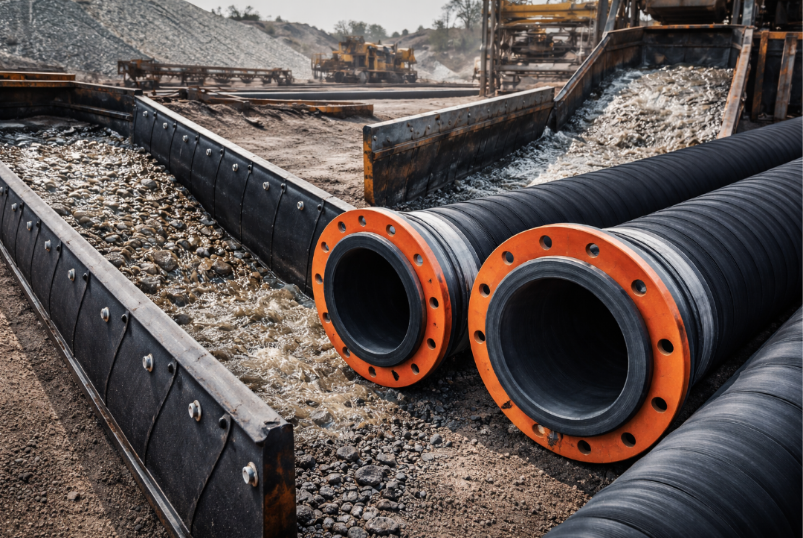
Used in slurry hoses, chutes, and pipe linings to handle abrasive materials and reduce wear caused by continuous flow.
Bulk Material Handling
Conveyor systems and transfer points benefit from rubber components that minimise impact damage and material loss.
Construction and Quarrying
Heavy-duty rubber solutions protect equipment from damage caused by aggregate and debris.
Industrial Processing Plants
Rubber linings and hoses are used to transport materials safely while maintaining system efficiency.
How to Select the Right Abrasion-Resistant Rubber Solution
- Evaluate Material Type: Identify whether the application involves fine particles, coarse aggregates, or slurry mixtures.
- Assess Wear Patterns: Understand where abrasion is most likely to occur within the system.
- Choose the Correct Thickness: Higher-impact areas may require thicker or reinforced rubber solutions.
- Consider Additional Factors: Temperature, moisture, and chemical exposure can influence material performance.
- Work with Experienced Manufacturers: Custom-engineered solutions often provide better long-term results than standard products.
L-Flex: Durable Rubber Solutions for Harsh Environments
At L-Flex, we manufacture abrasion-resistant rubber products designed for the toughest industrial conditions. From slurry hoses and linings to custom-engineered components, our solutions are built to withstand continuous wear while maintaining performance and reliability.
“Protect your equipment from wear and tear with abrasion-resistant rubber solutions from L-Flex.”